
Did you know that the food you eat can affect your ears? A study was done to find out if there is a connection between what you eat and problems like tinnitus and hearing difficulties. Tinnitus is when you hear ringing or buzzing sounds in your ears. The researchers looked at the diets of thousands of adults in the UK and found some interesting things. They discovered that eating more vitamin B12 can help reduce tinnitus, while eating too much calcium, iron, and fat can make it worse. They also found that eating a lot of protein can help with tinnitus. When it comes to hearing difficulties, eating foods high in vitamin D, fruits, vegetables, and meat, and low in fat can make a difference. This study shows that what you eat can have a big impact on how well you hear.
The Impact of Diet on Tinnitus and Hearing Difficulties
Introduction
Hey there! Have you ever wondered if what you eat can affect your hearing? Well, scientists have been studying this very question! They wanted to find out if there is a connection between the food we eat and two conditions called tinnitus and hearing difficulties. Tinnitus is when you hear ringing or buzzing sounds in your ears, even though no one else can hear them. Hearing difficulties can make it harder for you to hear and understand what others are saying. In this article, we will explore what the scientists discovered and how your diet may play a role in these conditions.
Methodology
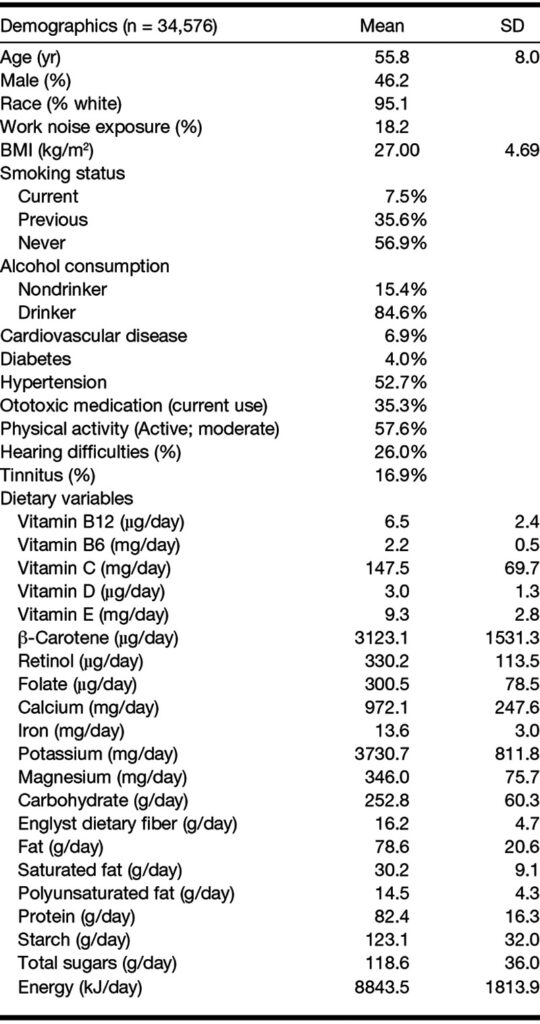
To find out if there is a link between diet and tinnitus or hearing difficulties, researchers collected information from a big group of adults living in the United Kingdom. They looked at the dietary habits of 34,576 adults between the ages of 40 and 69. This large group of participants is called the UK Biobank resource. By analyzing the data they collected, the researchers were able to see if there were any patterns between what people ate and their chances of experiencing tinnitus or hearing difficulties.
This image is property of www.ncbi.nlm.nih.gov.
Participants
The researchers studied a lot of adults – over 34,000! These adults were all between the ages of 40 and 69. Some of them experienced tinnitus or hearing difficulties, while others did not. By studying a big group of people, the researchers could get a better understanding of how diet might affect these conditions in the general population.
Data Analysis
After collecting all the information about what the participants ate, the scientists analyzed the data. They wanted to see if there were any connections between the participants’ diets and their likelihood of having tinnitus or hearing difficulties. This analysis helped them understand if certain foods or nutrients had an impact on these conditions.
This image is property of www.ncbi.nlm.nih.gov.
Relationship Between Diet and Tinnitus
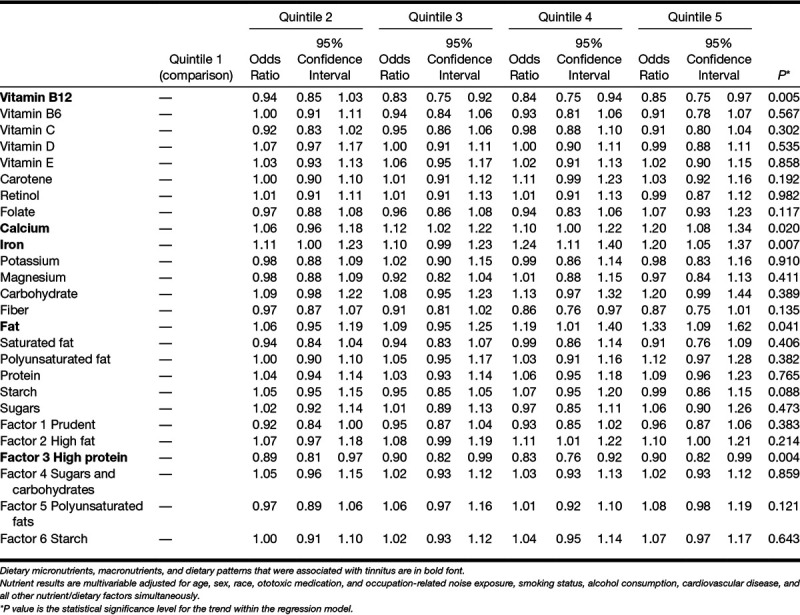
The researchers found some interesting results when looking at the relationship between diet and tinnitus. They discovered that people who had a higher intake of a vitamin called vitamin B12 were less likely to experience tinnitus. So, eating foods that have lots of vitamin B12, like eggs, meat, and fish, might help reduce the chances of having tinnitus.
On the other hand, the researchers also found that higher intakes of other nutrients increased the odds of having tinnitus. Foods that are rich in calcium, iron, and fat were linked to a higher likelihood of experiencing tinnitus. So, it’s a good idea to balance how much of these nutrients you have in your diet.
The scientists also found that people who followed a dietary pattern with a lot of protein were less likely to have tinnitus. So, including foods like lean meats, beans, and nuts in your diet might be beneficial.
Vitamin B12 Intake
Vitamin B12 is a super important nutrient that our bodies need to function properly. It plays a vital role in keeping our nerves healthy. When our nerves are in good shape, we are less likely to experience tinnitus. Vitamin B12 can be found in foods like eggs, meat, fish, and dairy products. So, make sure to include these foods in your diet to keep your B12 levels in check and help reduce the chances of having tinnitus.
This image is property of www.ncbi.nlm.nih.gov.
Calcium Intake
Calcium is great for our bones and teeth, but too much of it might increase the risk of tinnitus. Calcium-rich foods include dairy products like milk, cheese, and yogurt, as well as leafy green vegetables like spinach and kale. It’s important to have some calcium in your diet, but don’t go overboard!
Iron Intake
Iron is another nutrient that we need, but too much of it can lead to tinnitus. Iron can be found in foods like red meat, beans, and fortified cereals. It’s good to have some iron in your diet, but try not to have too much!

This image is property of www.ncbi.nlm.nih.gov.
Fat Intake
Fats are an important part of our diet, but when it comes to tinnitus, it’s best to watch how much fat we consume. Foods that are high in fat, like butter, oils, and fatty meats, were linked to a higher risk of tinnitus. So, it’s a good idea to enjoy these foods in moderation.
Dietary Patterns
A dietary pattern is the overall way we eat and the types of foods we consume regularly. The researchers found that people who followed a dietary pattern with high protein intake had a lower chance of having tinnitus. This means that including foods like lean meats, beans, and nuts in your diet might be helpful in reducing the likelihood of experiencing tinnitus.
This image is property of pixabay.com.
Relationship Between Diet and Hearing Difficulties
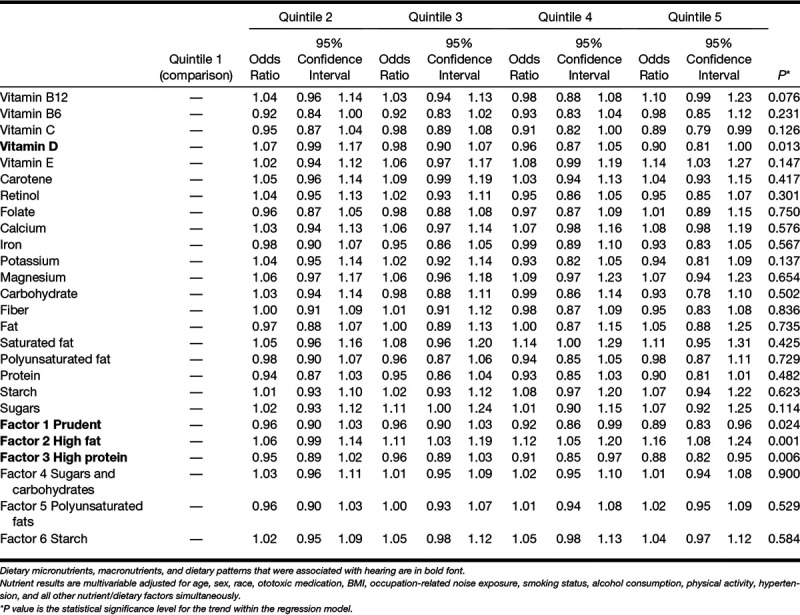
Now, let’s talk about the relationship between diet and hearing difficulties. The researchers discovered some interesting things in this area too! They found that people who had higher intakes of vitamin D, as well as those who followed dietary patterns high in fruits, vegetables, and meat while low in fat, were less likely to have hearing difficulties.
Vitamin D Intake
Vitamin D is important for our overall health, including our bones and immune system. The researchers found that having more vitamin D in our diet was associated with a lower risk of hearing difficulties. Foods that are rich in vitamin D include fatty fish like salmon and sardines, egg yolks, and fortified dairy products. So, make sure to enjoy these foods to keep your hearing in tip-top shape!
Dietary Patterns
The scientists also found that people who followed dietary patterns high in fruits, vegetables, and meat, while keeping their fat intake low, were less likely to have hearing difficulties. So, remember to include plenty of fruits, vegetables, and lean meats in your meals. It’s a great way to keep your hearing in good condition!
Conclusion
Wow, there you have it! We’ve learned a lot about the impact of diet on tinnitus and hearing difficulties. The researchers found that vitamin B12 can help reduce the chances of tinnitus, while too much calcium, iron, and fat can increase the risk. Following a dietary pattern with high protein intake was associated with a lower likelihood of tinnitus.
When it comes to hearing difficulties, higher vitamin D intake and dietary patterns high in fruits, vegetables, and meat, while low in fat, were linked to a reduced risk. This study shows that what we eat can have a substantial impact on our chances of experiencing tinnitus and hearing difficulties.
So, remember to eat a balanced diet that includes plenty of vitamins and minerals. Enjoy foods like meat, fish, fruits, vegetables, and dairy products in moderation. By taking care of what you eat, you’ll be taking care of your ears too!